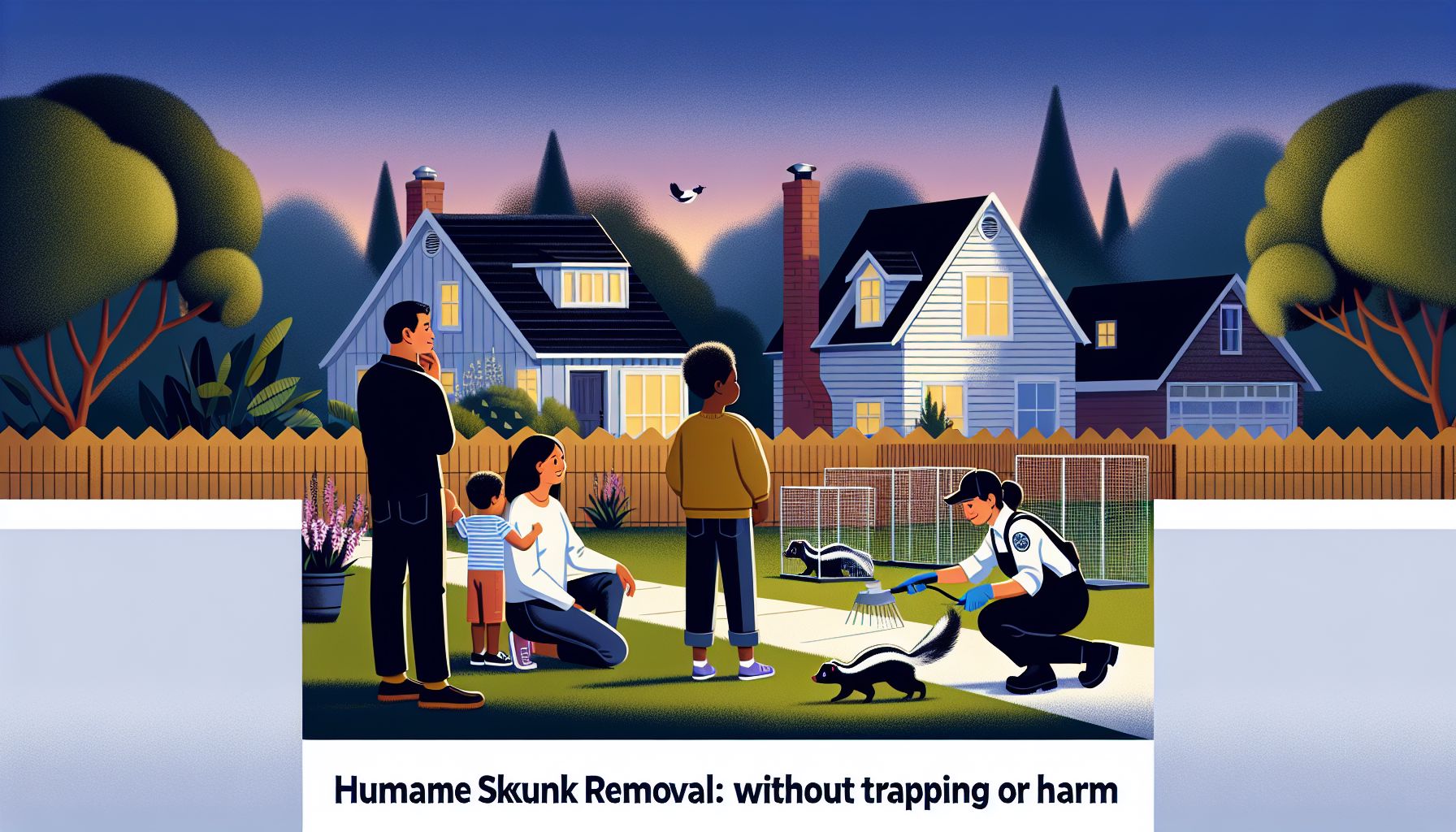
Living in close proximity to wildlife can bring us into regular contact with various species. One such species is the skunk, known for its pungent defense mechanism. When skunks establish their homes near our living spaces, they can become a nuisance and pose a potential threat to families. Humane skunk removal practices ensure that these animals are treated ethically and with respect. These methods focus on encouraging the skunks to leave on their own accord without causing harm.
Skunks in Urban Areas
In urban areas with a lot of green spaces, such as parks and gardens, it is not uncommon to encounter skunks. Their appearance in our surrounding environment is often due to factors like abundant food supply and suitable habitats. While they generally do not pose a significant threat to humans, their odor can be uncomfortable. In addition, they can cause damage to properties by digging holes in search of insects and grubs.

Observing Skunk Behavior
Skunks are primarily nocturnal creatures, and they can be seen scurrying around in search of food during the dusk hours. They are not aggressive by nature but can spray their infamous odor when they sense danger. Skunks will typically try to warn off potential threats by raising their tail and stomping their feet before releasing their spray.
Humane Approaches to Skunk Removal
Humane skunk removal revolves around not causing unnecessary stress or harm to the animals. Instead of trapping, harmful devices, or chemicals, these methods involve subtle techniques such as habitat modification and natural deterrents. These steps can often lead the skunk to leave the area:
Habitat Modification
Limit the attractions that might lure a skunk to your property. This can involve securing trash bins, removing pet food from outside areas, and sealing off potential den sites such as under decks or sheds.
Natural Deterrents
Use natural deterrents, such as citrus peels or motion-activated lights or sprinklers, to encourage skunks to leave.
Local Regulations Regarding Skunk Removal
In many regions, regulations dictate how skunk removal should be approached to ensure the well-being of the animals. For example, in some cases, it is seen as illegal to trap and relocate skunks without a permit. Make sure to research your local regulations to uphold ethical, legal standards while dealing with skunk intrusion.
Final Thoughts
While skunks can indeed pose a nuisance or threat in and around urban homes, it’s essential to remember that these creatures are an integral part of the ecosystem. Humane skunk removal practices allow us to manage skunk intrusions without causing harm to the animals. These methods involve knowledge of skunk behavior, employing deterrents, and modifying habitats while observing local regulations pertaining to wildlife removal. This process ensures our safety and the well-being of the skunk population, promoting peaceful co-existence.