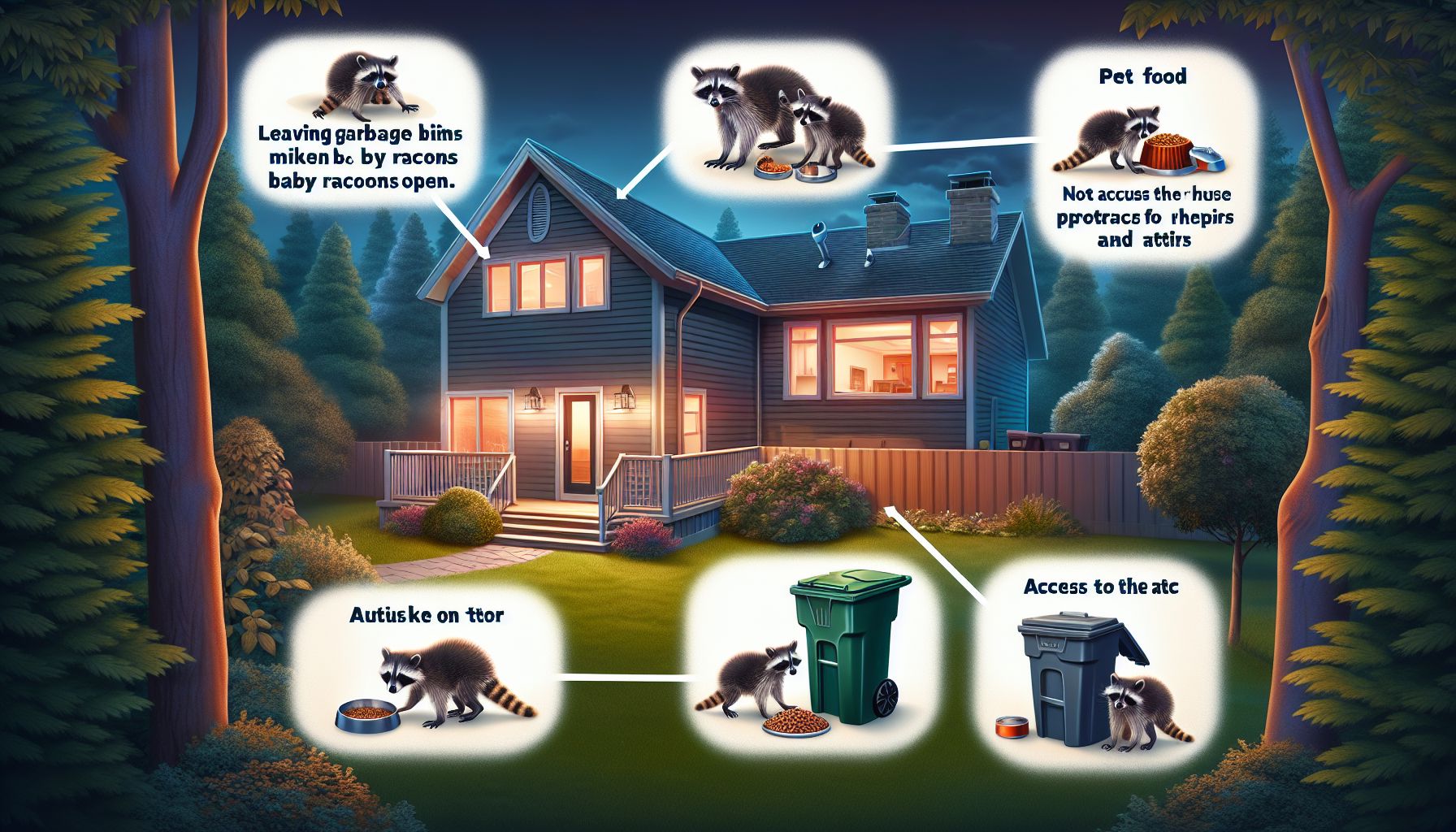
Observations within certain regions reveal consistent errors homeowners make during baby raccoon season. The spring months are typically when newborn raccoons appear, leading to an increase in raccoon encounters in urban and suburban areas.
Misunderstanding Baby Raccoon Behavior
One absolute mistake homeowners make is misunderstanding baby raccoon behavior. Young raccoons, like all wildlife, have specific habits and needs. Although they seem cute and harmless, baby raccoons can cause a variety of issues for homeowners. If given access, they can burrow into insulation, chew wires, or cause other property damage.
For example, in many cases, raccoons become a nuisance around garbage bins. Unsecured trash, pet food, or compost are all attractive meals for these hungry omnivores. Yet, many homeowners in older, historic neighborhoods often underestimate the determination of baby raccoons, leading to regular disturbances or even property damage.
Failure to Spot Signs of Raccoon Presence
Homeowners, particularly in urban settings with old infrastructure types, often fail to recognize the signs of raccoon presence. Many believe they can simply ignore the problem and it will go away once the baby raccoons grow and move on. However, no evidence suggests this approach is effective or practical.
Signs indicating a raccoon problem could include digging in the yard, tipped over garbage cans, or noises in the attic. This evidence is commonly dismissed or overlooked in suburban environments. Overlooking these signs can lead to population growth and ongoing raccoon issues.
Incorrect Removal Techniques
Contrary to popular belief, it is illegal in many cities to trap and remove raccoons without a license. However, homeowners often make the mistake of using DIY removal techniques, which can result in injury to themselves, damage to their property, or harm to the raccoons.
Due to regional laws, homeowners should avoid trying to remove the raccoons from their property by themselves. Incorrect removal techniques can be counterproductive. Often, these result in the mother becoming separated from her babies, which can lead to more significant problems down the line.
Conclusion
In a nutshell, common mistakes during baby raccoon season involve misunderstanding behavior, failing to spot signs of raccoon presence, and resorting to inappropriate removal techniques. Regrettably, these mistakes are not unusual in many urban and suburban neighborhoods.
Awareness and education about raccoons and their habits can alleviate many of these problems. For instance, being aware of the signs of raccoon presence can help homeowners to make necessary adjustments to their trash storage systems, thus mitigating potential disturbances. Understanding that an unlicensed and ill-equipped person should not attempt to remove raccoons will also spare homeowners and raccoons alike from unnecessary harm.
While raccoons are an integral part of our ecosystem, their proximity to human dwellings can lead to conflict. However, by avoiding these common mistakes, homeowners can ensure a peaceful coexistence with these native creatures.