Attic infestations by wildlife are common in many North American cities, including those with older housing stock and mixed urban-suburban environments. Cities such as Toronto, with a mix of century-old homes and mid-century suburban houses, often experience problems involving animals like raccoons, squirrels, bats, and birds taking shelter in attic spaces. Understanding the role of humane wildlife removal in preventing repeat infestations highlights both the behavioral ecology of urban wildlife and the features of local housing that encourage or discourage these visits.
Wildlife Behavior and Attic Invading Patterns
Animals commonly seek attic spaces for shelter because these areas offer safe, dry, and warm conditions, especially in colder regions such as southern Ontario or the northeastern U.S. These animals tend to establish nests or dens in attics during breeding or winter months. Raccoons seek secure entry points near chimneys, soffits, or roof edges, while squirrels prefer small openings along the eaves of older houses. Bats often use narrow chimney flues or roof vents to roost.
Repeat infestations often occur because wildlife remembers these safe locations or because the structural vulnerabilities of the house remain after removal. In many cases, the animals return within months or seasons since they detect familiar scent markers or find easy access to the attic again.
Common Structural Vulnerabilities in Urban and Suburban Attics
In older homes, materials used during construction sometimes degrade or create entry points over time. For example, wooden soffits may rot, allowing squirrels and raccoons to chew or claw their way inside. In cities such as Montreal or Boston, freeze-thaw cycles can deteriorate roofing caulking or flashing, creating new gaps. Vent covers and old chimney caps are often missing or damaged, making attics accessible to bats or birds.
Suburban homes built between the 1950s and 1980s often have attic ventilation systems that, if not properly maintained, can provide entryways for animals. Loose shingles, damaged facia, or gaps around vent pipes also serve as invitations.
Without comprehensive attic sealing, wildlife can exploit these vulnerabilities repeatedly, leading to ongoing problems.
Humane Wildlife Removal: Definition and Approach
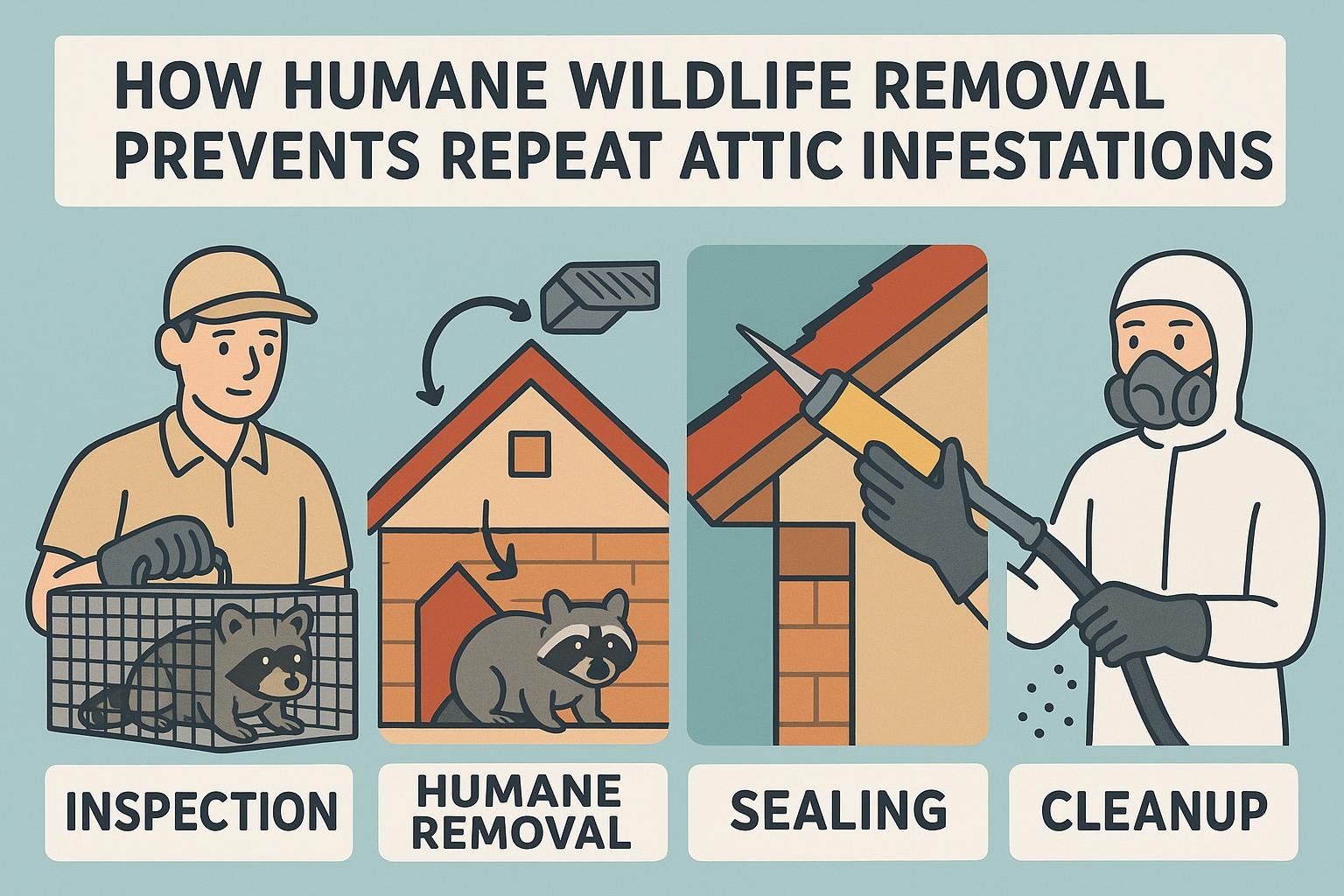
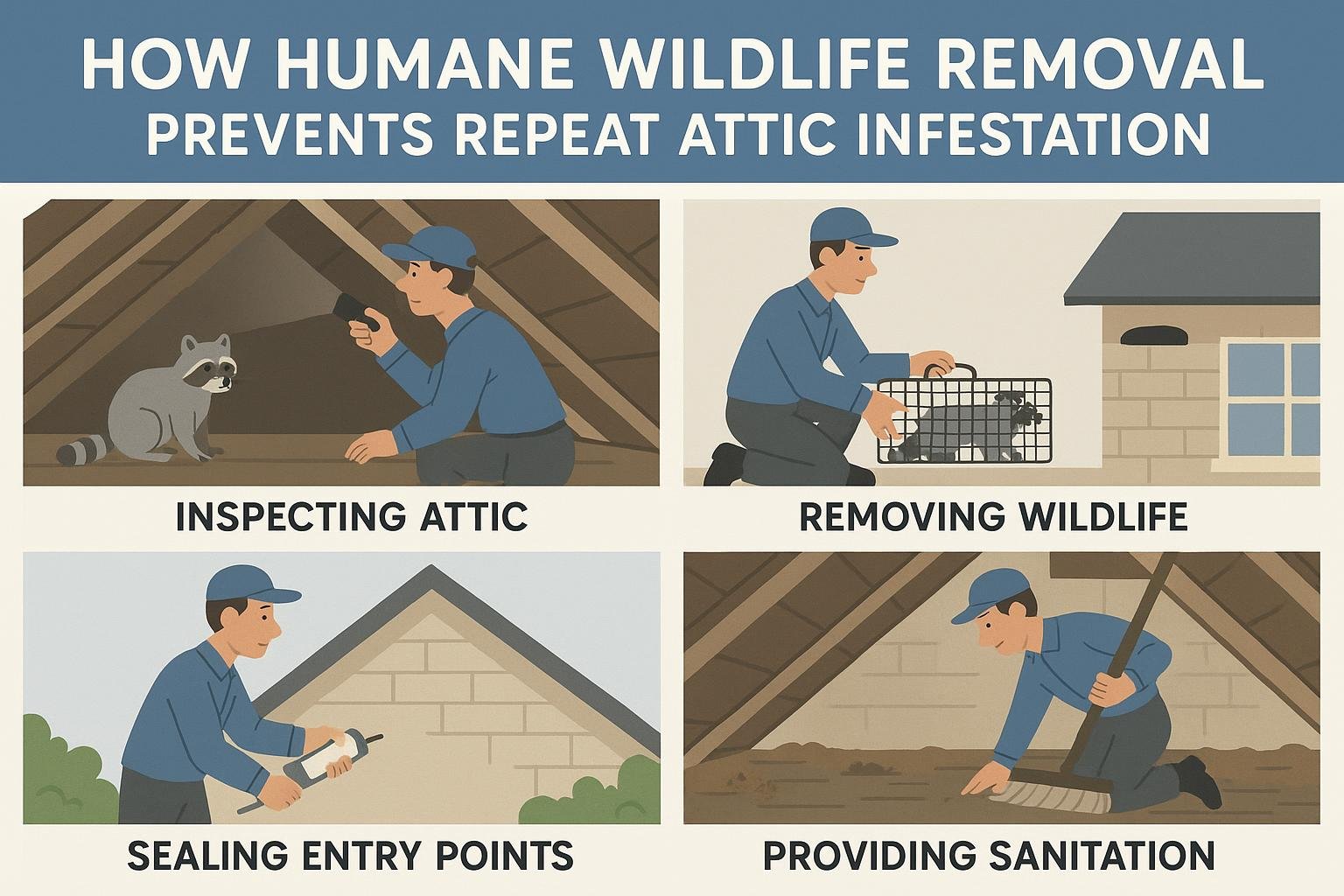
Humane wildlife removal involves capturing and relocating animals without harm. This approach often uses live traps placed near the animals’ entry points or in attic spaces. The goal is to remove the current inhabitants and then prevent re-entry by sealing all possible cracks and gaps.
This method contrasts with lethal control measures or partial DIY fixes that focus only on removing animals but do not address re-entry points. Humane removal respects local wildlife protection laws, especially for bats and certain bird species that may be protected by municipal or provincial legislation.
Why Humane Removal Helps Prevent Repeat Infestations
Complete Inspection and Exclusion
One key factor in preventing repeat attic infestations is a thorough inspection combined with complete exclusion. When animals are trapped humanely, the entire attic and roof perimeter are examined for all possible access points. This examination tends to reveal overlooked vulnerabilities that partial repairs miss.
Sealing gaps with durable, animal-resistant materials is essential. For example, metal mesh and steel flashing are effective against animals that gnaw or claw. Properly installed chimney caps and vent covers further block common entry routes.
Avoiding Scent Trails
Animals tend to mark their territory with urine, feces, or secretions. Humane removal reduces the time animals spend inside the attic, which can limit the buildup of scent trails. Reducing these markers is important because wildlife often returns to spaces where they detect their own or conspecifics’ scents.
After removal, attic spaces are sometimes cleaned of waste and smell residues to discourage re-inhabitance.
Respecting Seasonal and Legal Constraints
Humane wildlife removal considers breeding seasons and municipal regulations. For instance, many bat species have maternity periods when eviction is illegal or harmful. Humane removal often delays eviction until young animals can survive outside, ensuring humane treatment and compliance with wildlife protection laws.
Attempting to exclude wildlife during these sensitive periods risks trapping live young animals inside or harming vulnerable populations, which can worsen infestations when the birds or mammals return.
Addressing Underlying Attractants
Humane methods tend to include observing why animals are attracted to certain homes. For example, attics near fruit trees or garbage bins may attract raccoons or squirrels. Outdoor lighting or easy food sources can increase wildlife activity.
While humane removal focuses on animal eviction and exclusion, understanding local environmental factors helps to reduce the likelihood of future visits.
Limitations and Challenges
Humane wildlife removal is not always a guaranteed long-term solution. In dense urban environments such as Chicago or Philadelphia, animals may find neighboring houses with similar vulnerabilities. This regional pressure can result in new infestations even after a home has been secured.
Also, DIY exclusion without professional-level inspection often misses small or hidden entry points. Seasonal changes such as ice damage or heavy rains can open new gaps after initial repairs.
Climate plays a factor too. In cold winters, attics attract animals more strongly as they seek warmth. Temporary fixes done in fall might fail by late winter, inviting return visits.
Case Observations from Regional Housing
Studies from cities with older housing indicate that repeat attic infestations often result from partial or hurried exclusions. For example, field documentation from Toronto and Vancouver suggests that many residents who attempt DIY wildlife removal report new attic invasions within six months if repairs do not fully seal entry points or if waste is not removed.
In contrast, properties where humane removal combined with complete attic sealing took place showed much lower rates of recurring problems over extended follow-ups.
Conclusion
Humane wildlife removal contributes to preventing repeat attic infestations by combining animal eviction with complete and thoughtful exclusion. This approach accounts for regional climate, housing age-related vulnerabilities, and behavioral patterns of local wildlife species common in urban and suburban North America.
Partial or DIY measures typically fail because they do not fully seal entry points or address scent trails. Seasonal and legal factors also influence effectiveness. In cities such as Toronto and Montreal, where attics of older homes are common wildlife targets, humane removal methods provide a more comprehensive response to recurring wildlife problems.
This understanding emphasizes the importance of integrating animal behavior studies, building inspection, and local environmental context in managing attic wildlife issues sustainably and ethically.