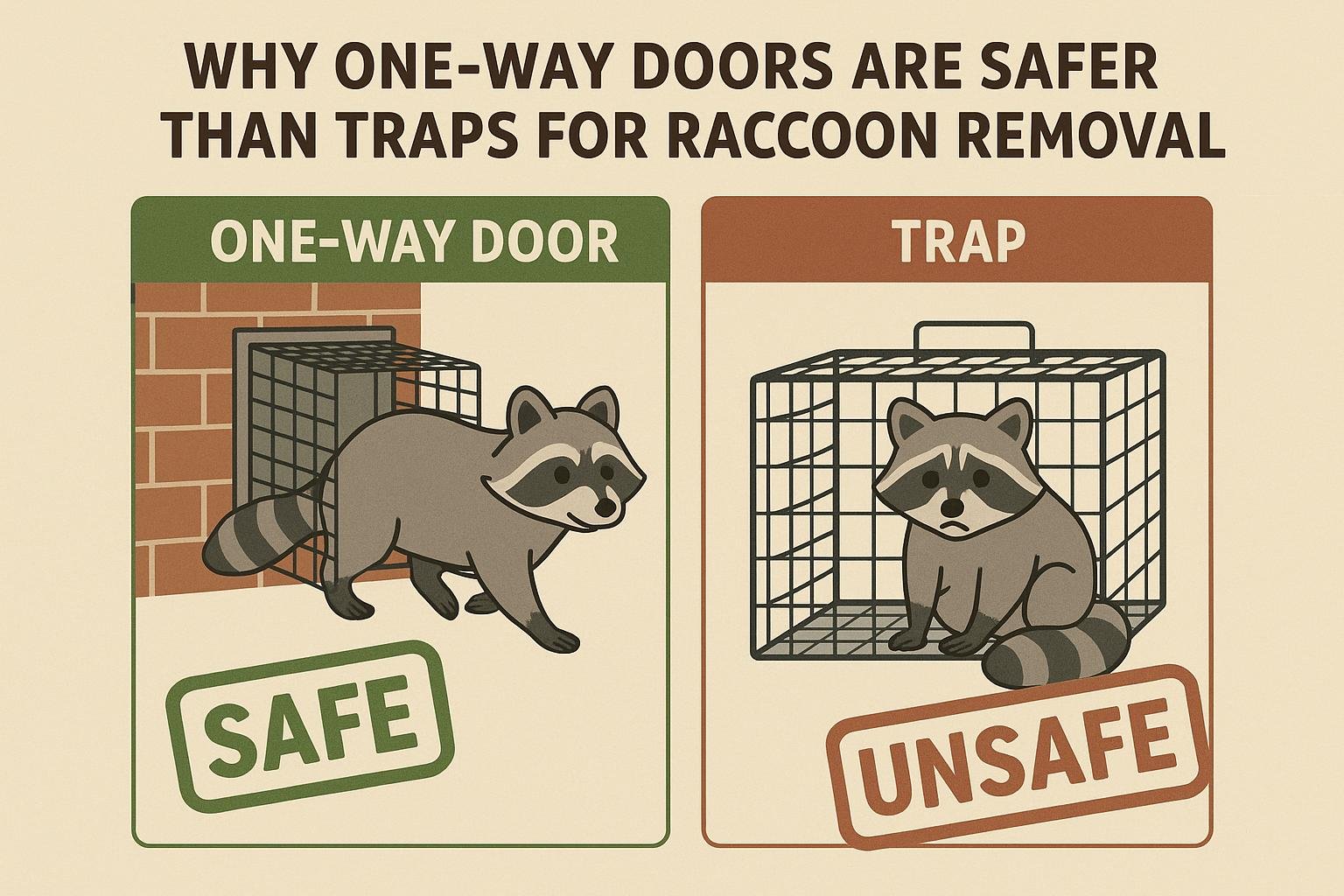
Raccoons often find shelter in urban and suburban homes, especially in regions like the Pacific Northwest where old houses with wooden eaves and large attics are common. They seek warmth and safety, especially during colder months. Homeowners and wildlife observers frequently face the challenge of removing raccoons when they enter attics, chimneys, or crawl spaces. Two common removal methods are one-way doors and live traps. This article explains why one-way doors generally offer a safer option compared to traps for raccoon removal, especially in the context of regional housing and environmental factors.
How One-Way Doors Work
A one-way door is a device that allows raccoons to leave a space but not to re-enter. It fits over an identified exit point, such as an attic vent or chimney. When a raccoon tries to leave, it pushes the door open, but the door closes behind it, preventing return. The animal then leaves the structure and finds natural shelter elsewhere.
Using one-way doors relies on an understanding of raccoon behavior. Raccoons typically seek to exit a disturbed or confined space when possible. One-way doors align with this instinct by offering an easy exit without stress points caused by capture or confinement.
Reasons One-Way Doors Are Safer for Raccoons
1. Reduced Injury Risk
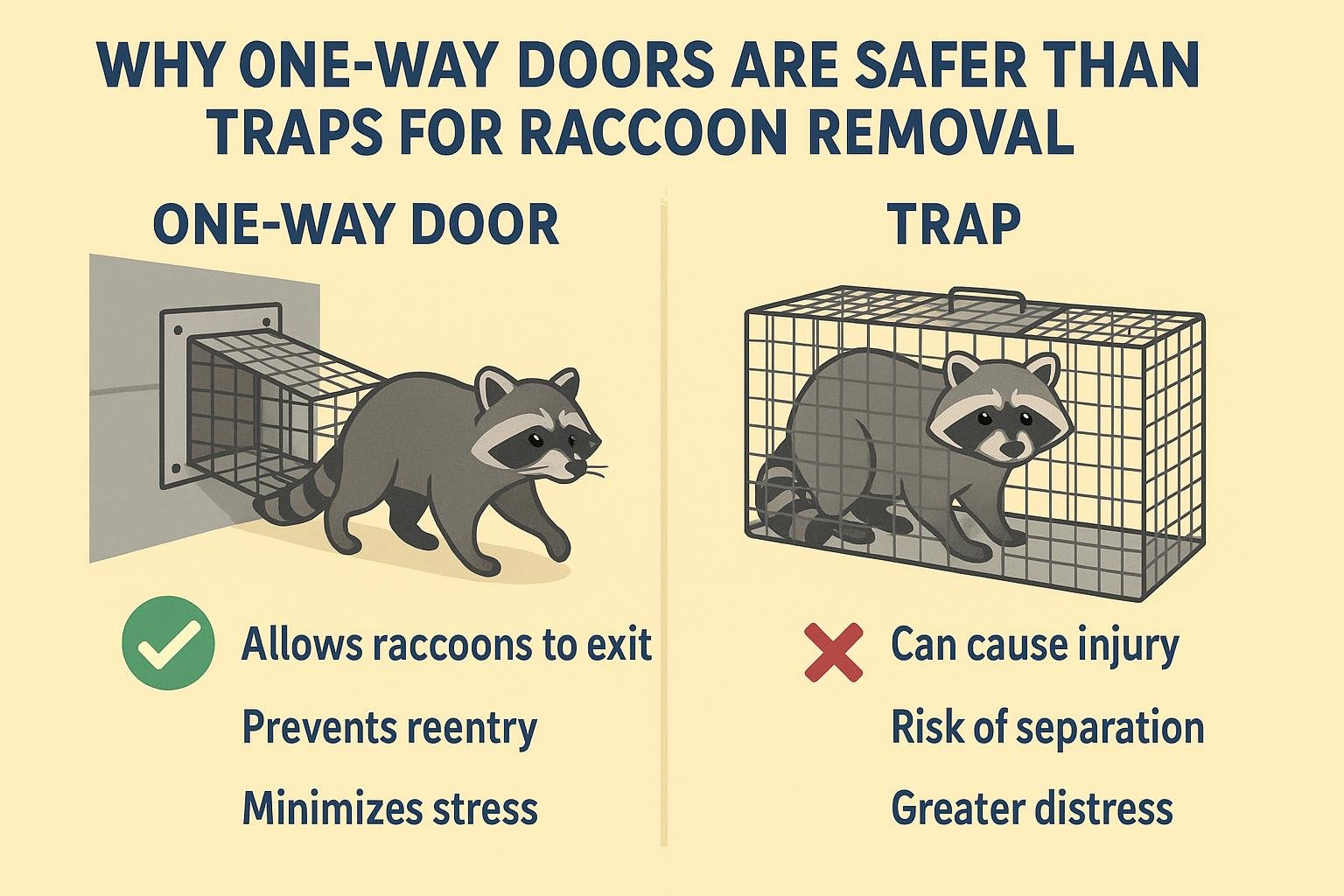
Traps can injure raccoons. Many cage traps close abruptly, which can cause bruises, broken limbs, or stress-related injuries. Raccoons often struggle inside traps, increasing the chances of harm. One-way doors avoid confinement entirely, allowing the animal to move freely and calmly out of a space, reducing physical harm.
2. Lower Stress Levels
Trapping confines raccoons to a small area, often in bright or noisy environments away from their usual shelter. This confinement causes significant stress, which affects their well-being. One-way doors allow a raccoon to leave voluntarily, minimizing panic or distress during the removal process.
3. Prevention of Re-Entry
One-way doors physically block the return passage. Traps remove raccoons temporarily but do not always prevent other raccoons from entering or the same individual from finding another entry. Blocking the entry point with a one-way door ensures the problem is less likely to recur until a proper seal is completed.
Challenges and Considerations
Seasonal Restrictions
In many areas like Seattle or Portland, raccoon removal is subject to local wildlife regulations. During birthing seasons, trapping or exclusion can be illegal to avoid separating mothers from their young. One-way doors may risk trapping juveniles inside if installed prematurely. Knowledge of local laws and raccoon life cycles is essential.
Multiple Animals
Raccoons often behave in family groups. One-way doors allow one or more animals to leave but do not remove all occupants immediately. Traps can catch multiple animals if set properly. However, trapping uses more equipment and poses higher risks.
Structural Factors
Older homes with loose or extensive attic access points can make installation of one-way doors challenging. Vents or gaps may be irregular or fragile. Physical inspection to identify the main entry is required to place a one-way door effectively. Traps may be placed inside a den area but may not prevent other entry points from being used.
Why Traps Are Less Ideal
Traps require regular monitoring. Without frequent checks, trapped raccoons can suffer from dehydration, starvation, or exposure, especially in urban environments. Trapped animals also risk attracting predators or cause public safety concerns if left unattended.
Traps often cause heightened stress to raccoons, risking bites or scratches during handling. Injuries can occur while animals try to escape. Many homeowners and wildlife observers report complications when moving raccoons caught in traps due to unpredictable behavior.
Regional Environmental Context
In the Pacific Northwest, raccoons thrive in suburban neighborhoods with mature trees, abundant water sources, and older housing stock. Many homes have multiple roof vents, gaps, and chimney openings. This environment facilitates common entry points for raccoons. Repairing the structural vulnerabilities often comes after the animals have been excluded, which one-way doors support effectively.
The mild winters allow raccoons to remain active year-round, increasing the chance of re-entry without permanent exclusion. One-way doors help reduce repeat intrusions over time by allowing temporary escape while preventing re-entry.
Summary of Pros and Cons
| Method | Pros | Cons |
|—————–|——————————————-|——————————————|
| One-Way Doors | Low injury and stress risk, prevents return, aligns with natural behavior | May not exclude all animals immediately, depends on correct installation, potential legal restrictions during birthing season |
| Traps | Allows capture of multiple animals, immediate physical removal | High injury and stress risk, requires frequent monitoring, risk of escape or ill-treatment |
Conclusion
One-way doors offer a generally safer and less stressful method for removing raccoons from buildings compared to traps. They reduce injury risk and support natural raccoon behavior by allowing voluntary exit. In many parts of the Pacific Northwest, they fit well with typical house structures and seasonal raccoon activity patterns. However, their effectiveness depends on proper identification of entry points, knowledge of local regulations, and careful timing in relation to raccoon breeding cycles. Understanding these factors provides insight into why one-way doors remain a preferred tool for humane raccoon exclusion in residential settings.