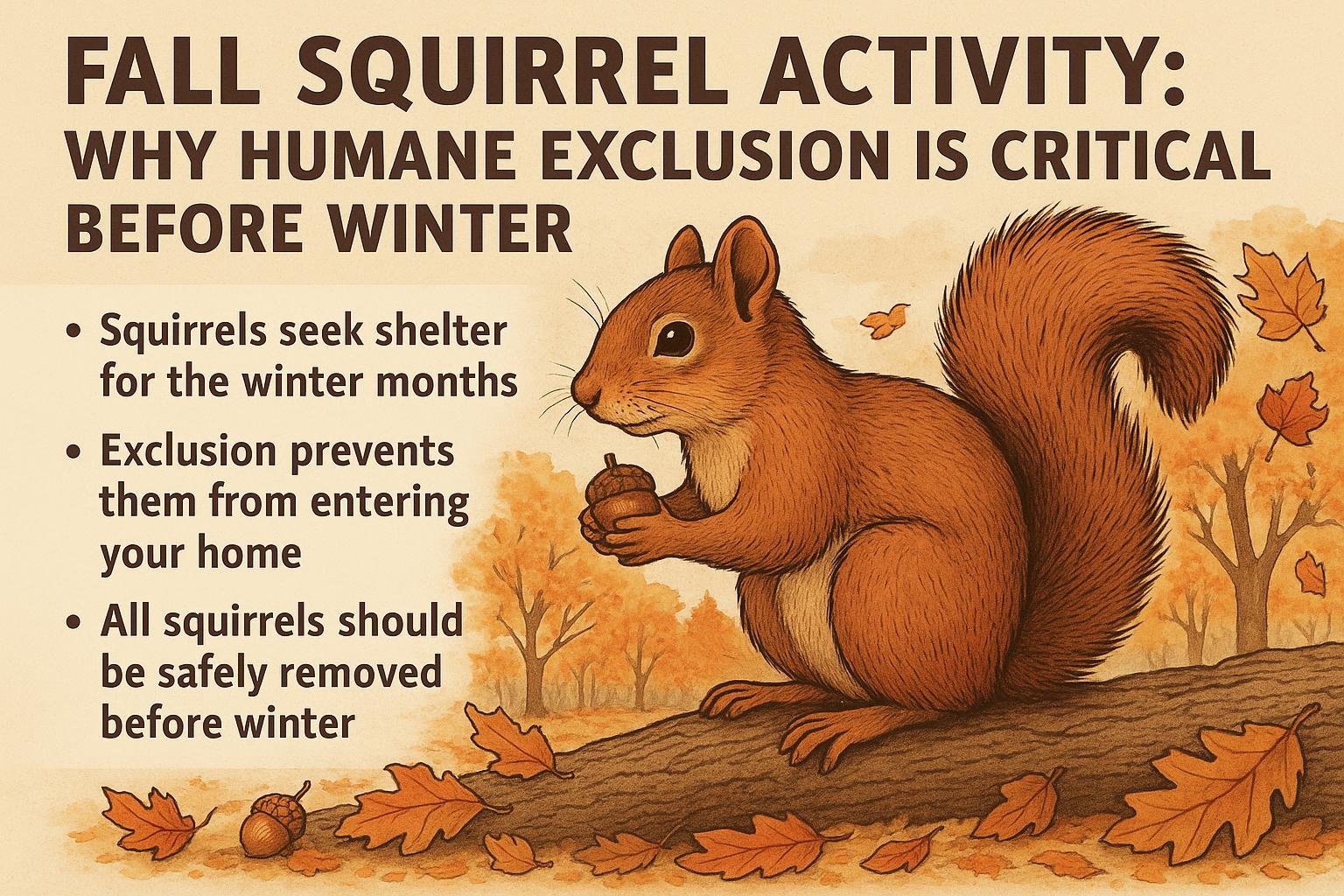
As fall arrives in regions like Chicago, Cleveland, and Detroit, squirrels become more active in and around residential areas. This behavior often leads to encounters with homes and other structures. Understanding why squirrels behave this way and the importance of humane exclusion methods before winter helps residents respond appropriately to recurring issues.
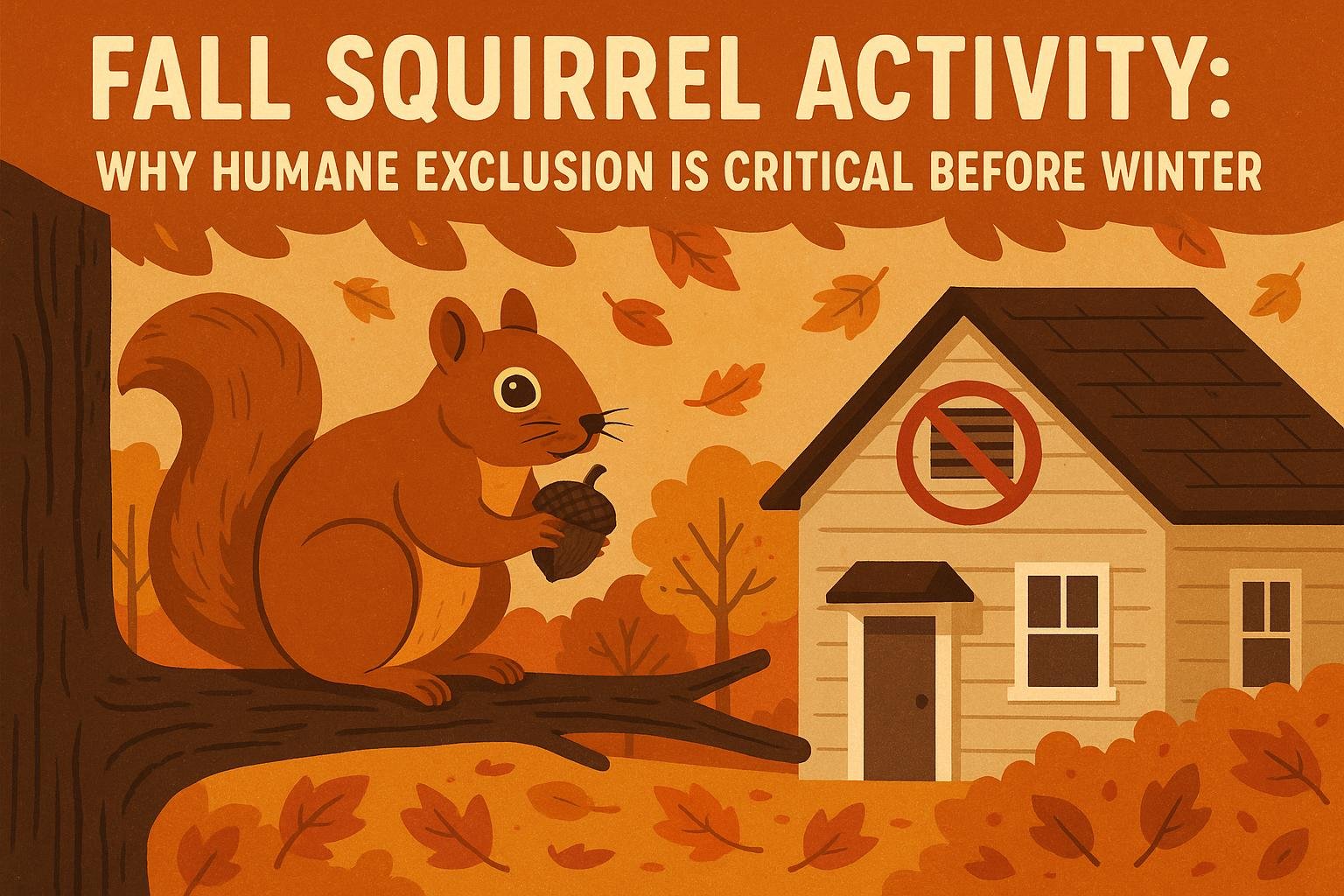
Seasonal Behavior of Squirrels
Squirrels, especially tree squirrels common to the Midwest urban and suburban environments, prepare extensively for winter during fall. They gather nuts and seeds, build nests, and seek warm, sheltered places to survive cold months. In many cases, they explore attics, chimneys, and other structural voids as potential den sites.
This increased activity leads to heightened chances of squirrels finding entry points into houses. Rooflines, soffits, vents, and gaps around eaves become access points. Structures with older siding or worn seals near windows and vents are particularly vulnerable to squirrel entry.
Why Squirrels Enter Homes in Fall
Homes offer warmth and shelter that outdoor nests cannot match during winter. Squirrels look for cavities that provide protection from wind, rain, and predators. Attics, wall spaces, and chimney areas often provide insulated, dry environments. The food stores inside homes, such as accessible bird feeders, can also attract squirrels.
Fall weather in Midwest cities typically fluctuates, with early cold spells prompting squirrels to seek secure indoor spaces. This seasonal pressure results in more frequent incursions.
Typical Entry Points and Vulnerabilities
Older homes in cities like Milwaukee and Columbus tend to have more structural vulnerabilities. Common entry points include:
- Damaged roof shingles or missing tiles.
- Gaps around chimney flashing or vents.
- Broken or loose soffits and fascia boards.
- Holes in attic vents or dryer vents not covered with mesh.
- Loose window seals or cracks near foundation roofs.
These points allow squirrels to squeeze through gaps as small as 1.5 inches. The animals can climb walls, trees near structures, or gutters to reach higher entry junctions.
The Importance of Humane Exclusion Before Winter
Humane exclusion refers to methods that remove squirrels from homes without harming them and then block re-entry points to prevent future invasions. Conducting humane exclusion before winter matters for several reasons:
-
Prevents Infestations: Early exclusion stops squirrels from establishing nests inside homes. If a squirrel nests indoors and produces young, the problem multiplies.
-
Protects Structural Integrity: Squirrels often chew on wood, wiring, and insulation. Damage during winter when help is harder to reach increases repair costs.
-
Avoids Conflicts: Squirrels that get trapped indoors during colder months may become aggressive or distressed, raising risks to humans and pets.
-
Considers Animal Welfare: Humane methods avoid injury or death. Fall exclusion respects the animal’s natural behaviors and seasonal needs by encouraging outdoor survival in natural habitats.
-
Reduces Recurrence: Proper sealing after removal deters future invasions, minimizing seasonal re-entry attempts that are common if only partial fixes occur.
Challenges in DIY and Partial Fixes
Many homeowners attempt to stop squirrel entry using simple fixes like chimney caps or sealing visible holes. These efforts often fail for several reasons:
- Squirrels are persistent and can find new or overlooked points.
- Partial sealing may trap squirrels already inside, causing distress.
- Without understanding squirrel behavior, some fixes unintentionally make structures more accessible.
- DIY repairs sometimes use materials not suited to withstand chewing or weather.
Therefore, understanding the timing and behavior of squirrels before winter helps in planning exclusion strategies that work.
Impact of Local Climate and Urban Environment
In cities such as Pittsburgh or Cleveland, fall weather can shift quickly from mild to freezing. These changes influence squirrel urgency to seek shelter indoors. Urban landscapes with abundant trees close to homes encourage squirrel activity near rooftops.
Older neighborhoods with mature, large trees tend to have more squirrel presence compared to areas with younger or fewer trees. Additionally, urban squirrels have adapted behaviors allowing them to live near humans, increasing interactions with housing.
Legal Notes on Wildlife Exclusion
Local regulations in many Midwest states protect squirrels as native wildlife. These laws often restrict lethal control and mandate humane methods when dealing with nuisance wildlife. Fall is typically considered an allowed season for exclusion since young squirrels are often independent by then, reducing risks to dependent young animals.
Permits and regulations vary by municipality, so residents should be aware of local rules regarding wildlife removal to ensure compliance.
Conclusion
Observations from Midwestern cities highlight that fall squirrel activity peaks as the animals prepare for winter. The increase in entry attempts correlates with weather changes and shelter needs. Humane exclusion done before winter reduces damage, prevents home invasion escalation, and supports animal welfare.
Home structures with known gaps or deteriorations near roof or vent areas face greater risks of squirrel intrusion. Understanding the timing and drivers of squirrel behavior informs better management that balances human and wildlife interests in regional urban and suburban settings. This seasonal pattern repeats annually, emphasizing the need for thoughtful, preventative measures before the onset of cold weather.