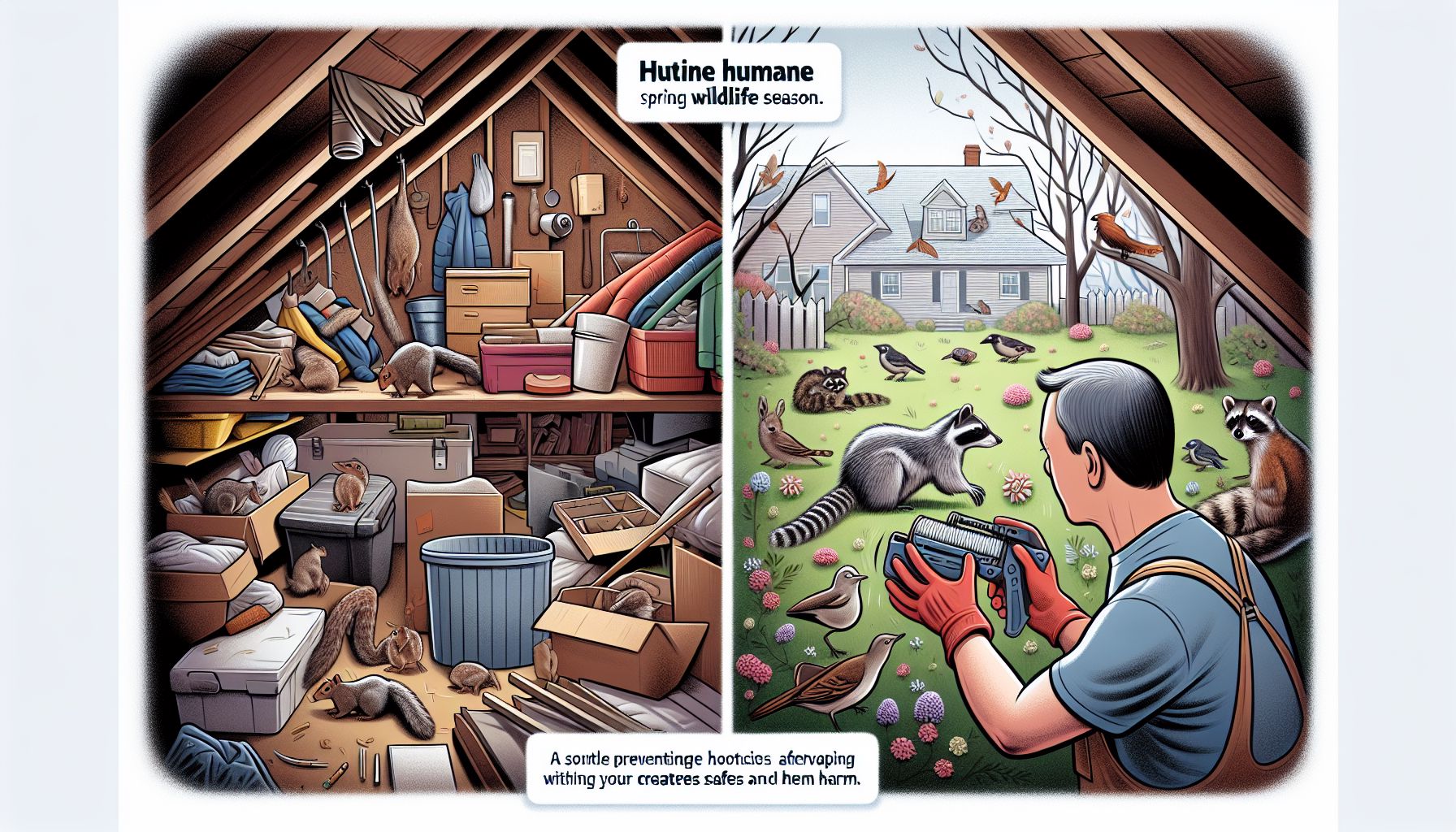
Every year, as spring arrives, the activity of various wildlife species notably increases. In countless urban and suburban regions, a common issue for homeowners is the occasional intrusion of these creatures into their attics. Understanding the reasons behind this occurrence as well as the effective, humane methods of eviction can prove useful in dealing with this seasonal challenge.
The Arrival of spring – A Factor in Wildlife Intrusions
The spring season is usually a time of heightened wildlife activity, with many animals emerging from the colder months of hibernation or dormancy. The increase in warmth, food availability, and daylight hours all contribute to the renewed activity. However, this heightened activity also leads to an increased need for shelter, particularly for breeding purposes. The search for this shelter can, in many cases, lead these creatures ‘indoors.’
In regions with aged or weathered housing stock, attics can become particularly susceptible to animal intrusions. This is primarily due to structural vulnerabilities, such as weakened roofing or open vents, which provide these creatures easy access.
Misconceptions About Wildlife Intrusions
One common misconception is that these creatures are ‘infesting’ homes out of malicious intent. In reality, they are only seeking safe, warm spaces to live and breed, often without recognizing that they are intruding into human homes. Another misconception is that these critters can easily be ousted by simply sealing off the entry points. However, this often fails as it neglects to consider the resilience and resourcefulness of many wildlife species, who may simply find or create another access point.
Humane Attic Removal – What Does it Entail?
When faced with wildlife intrusions, many homeowners resort to trapping or killing these creatures, either out of fear or frustration. However, these methods are not only severe but often prove ineffective in the long-run. On the other hand, humane animal removal focuses on carefully and gently evicting these creatures without causing them any harm.
Typically, this process involves identifying the animal’s entry points, assessing the extent of the infestation, and formulating an eviction plan. The plan usually includes the use of humane live traps or one-way exclusion devices that allow the animals to exit but not reenter.
Why Opt for Humane Attic Removal?
Although the humane eviction process might seem lengthier and more demanding than traditional methods, its benefits are substantial. It treats the animals with respect and understanding, thereby promoting a positive coexistence between humans and wildlife. Furthermore, it often proves to be more effective as it not only removes the current occupants but also deters future occupants by making necessary structural modifications.
Legal and Municipal Factors
In many cities and regions, local laws and restrictions are in place concerning the handling of wildlife. Often, these laws mandate the use of humane methods for the relocation and exclusion of wildlife. Therefore, familiarizing oneself with the local regulations is an essential step in dealing with an attic infestation.
In conclusion, the arrival of spring can indeed amplify wildlife intrusions into attics. Yet, understanding the causes and recognizing our fellow creatures’ needs can make this a manageable issue. Adopting a humane approach not only yields a more effective, long-term solution but also fosters a healthier, more respectful relationship with our local wildlife.